
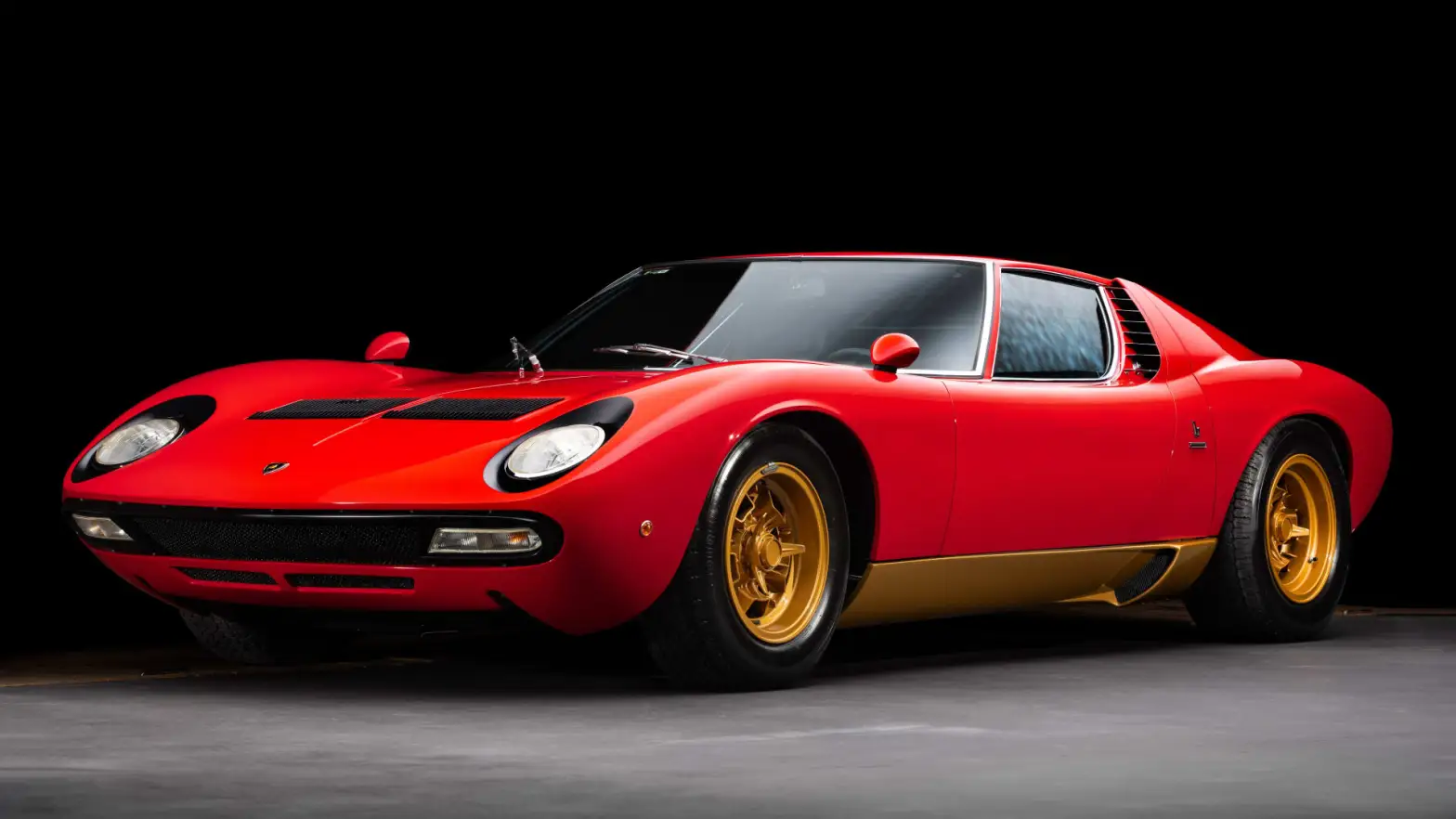
The Miura is a name that resonates deeply with car enthusiasts and automotive historians alike. It refers to a series of high-performance sports cars produced by Lamborghini during the 1960s and early 1970s, which continue to captivate automotive aficionados today. The Miura is widely regarded as one of the most significant cars ever produced in the history of automobiles, shaping the future of supercars as we know them.
This article explores the Lamborghini Miura in great detail, tracing its history, engineering, design, and legacy. Along the way, we’ll dive into the public’s fascination with this iconic car, answering common questions and offering insights into its place in automotive history.
The Birth of the Lamborghini Miura
The Vision Behind the Miura
In the early 1960s, Ferruccio Lamborghini, an ambitious and successful Italian businessman, sought to rival Ferrari, which at the time dominated the world of high-performance cars. Lamborghini’s vision was to create a car that not only delivered incredible speed and handling but also embodied style and elegance, pushing the boundaries of automotive design.
The Miura was born from this ambition, but it wasn’t just Lamborghini himself who made the Miura possible. It was the collective genius of several visionaries, led by Marcello Gandini, the designer at Bertone, and Gian Paolo Dallara, who was responsible for the engineering. These individuals worked together to create a car that would go on to be regarded as one of the most influential in the history of automotive design.
Unveiling the Miura
The Lamborghini Miura was unveiled in 1966 at the Geneva Motor Show, where it caused an immediate stir. Its mid-engine design, sleek lines, and dramatic appearance were groundbreaking. At the time, most performance cars featured front-mounted engines, but Lamborghini’s decision to place the engine in the middle of the car was revolutionary. This move not only gave the Miura a unique appearance but also vastly improved its handling by achieving better weight distribution.
Engineering Marvel
Power and Performance
Under the hood of the Miura was a 3.9-liter V12 engine. This engine was capable of producing an impressive 350 horsepower, which allowed the Miura to reach a top speed of around 180 mph (290 km/h). This was an extraordinary achievement for the time, and it helped the Miura earn the distinction of being the fastest production car in the world at that point.
The Miura’s engine was developed by Giotto Bizzarrini, a talented engineer who had previously worked with Ferrari before joining Lamborghini. His expertise in V12 engine design helped make the Miura’s engine both powerful and refined.
The Mid-Engine Layout
What set the Miura apart from other cars of its time was its mid-engine layout, which positioned the engine behind the driver but ahead of the rear axle. This design allowed for better weight distribution and enhanced handling characteristics. The Lamborghini Miura quickly became a sensation on the road due to its ability to offer not only blistering speed but also exceptional cornering abilities, a hallmark of any great sports car.
Chassis and Suspension
The Miura’s chassis was designed to support the powerful engine and provide a smooth ride without compromising performance. It featured an independent suspension system that further contributed to the car’s remarkable handling capabilities. The car’s rear suspension used a unique layout called double wishbones, providing both stability and precision in every turn.
The Miura’s chassis also included a steel monocoque construction, making it relatively lightweight for a car of its time, and crucial to its agility on the road.
Performance on the Road
When it came to performance, the Lamborghini Miura lived up to its hype. Its acceleration, braking, and handling were all exceptional for its era. Despite being a supercar, it was a car that could be driven on the road regularly, making it both an iconic collector’s piece and a practical vehicle for those lucky enough to own one.
Design: A Work of Art
The Exterior: A Timeless Icon
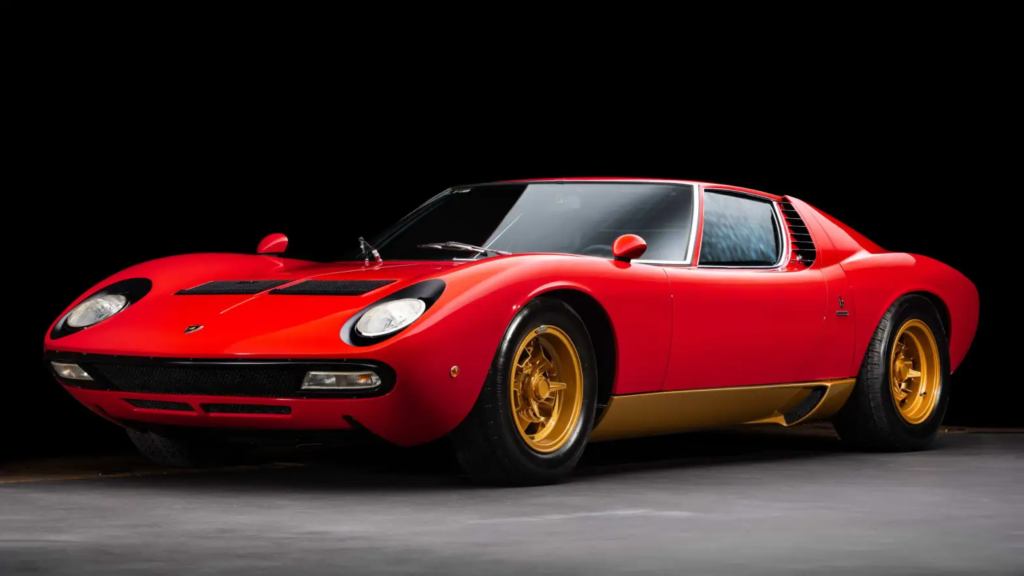
One of the defining features of the Miura was its design. The car’s low, wide stance and striking lines made it a true work of art. Designed by Marcello Gandini at Bertone, the Miura’s design became synonymous with 1960s luxury and high-performance sports cars.
The long, flowing lines of the car, coupled with its aggressive stance, made the Miura a true head-turner. The front end of the car featured a wide, low-set grille with sharp, angular headlights that added to its menacing look. The car’s rear was just as iconic, with its distinctive air vents and curvaceous rear fenders.
The Interior: Function Meets Luxury
Inside, the Miura balanced luxury with functionality. The cabin was minimalist yet refined, with leather seats and simple but elegant controls. Despite its small size, the interior of the Miura exuded sophistication, making it a true sports car designed for both performance and comfort.
The Miura was not just a pretty face; it was a machine built for speed and handling, with every design choice contributing to its status as an icon of automotive excellence.
Models and Variants
Over the years, Lamborghini produced several variants of the Miura, each improving upon the last in terms of performance, technology, and design.
Miura P400 (1966)
The original Miura P400 was the first to hit the streets. With a 3.9-litre V12 engine, it was capable of producing 350 horsepower and had a top speed of around 170 mph.
Miura P400S (1968)
In 1968, Lamborghini introduced the Miura P400S, which offered improved suspension and additional refinement. The P400S was more comfortable to drive and featured an upgraded engine that produced 370 horsepower. The handling was also enhanced to make the car even more stable at high speeds.
Miura P400SV (1971)
The final version of the Miura, the P400SV, was released in 1971. This model featured even more power, with a 380-horsepower engine. The design was slightly modified, with the rear wheel arches widened to accommodate larger tires for better stability and cornering. The P400SV is regarded as one of the most collectable and desirable Miura variants.
The Legacy of the Miura
A Cultural Icon
The Lamborghini Miura’s wasn’t just a car; it became a cultural symbol of the 1960s and 1970s. It was a symbol of status, style, and power, often seen in movies, magazines, and on the roads of the wealthiest individuals. The Miura’s design, performance, and engineering were groundbreaking at the time, and it set the stage for future supercars.
One of the most significant aspects of Miura’s legacy is how it influenced subsequent Lamborghini models, such as the Countach and Diablo. These cars, like the Miura, would push the boundaries of performance, engineering, and design.
Racing and Motorsports
While the Miura’s was primarily designed as a road-going supercar, it did have its moments in motorsports. A few Miuras were modified for racing, and they performed admirably in various events. However, Lamborghini’s focus remained on the production of road cars, and as the years went by, racing began to take a back seat to more refined production models.
Collectibility
Today, the Miura is regarded as one of the most collectable cars in the world. Its rarity, historical significance, and design have made it a sought-after vehicle at auctions. Classic examples of the Miura P400, P400S, and P400SV fetch millions of dollars at auctions, with prices continuing to rise as its legacy endures.
FAQs
How much does a Lamborghini Miura cost today?
The price of a Lamborghini today can vary depending on the model, condition, and originality. However, prices typically range from $1.5 million to $3 million or more for well-preserved examples of the P400SV.
Is the Lamborghini Miura street legal?
Yes, the Miura was designed for the road and is fully street-legal, though modern regulations may require certain modifications for it to meet safety standards in certain regions.
How fast is a Lamborghini Miura?
The Lamborghini Miura could reach speeds of up to 180 mph (290 km/h), making it one of the fastest production cars of its time.
Why is the Lamborghini Miura so iconic?
The Miura is iconic because it was one of the first mid-engine supercars ever created, and it represented a perfect blend of performance, design, and innovation. It set the stage for future Lamborghini models and is widely regarded as one of the most influential cars in the history of sports cars.
In Summary
The Lamborghini is more than just a car. It is a symbol of Italian craftsmanship, a groundbreaking engineering feat, and a cultural icon. From its revolutionary mid-engine layout to its stunning design, the Miura broke new ground in the automotive world and remains an inspiration to car manufacturers and enthusiasts alike.
To read more, Click here