
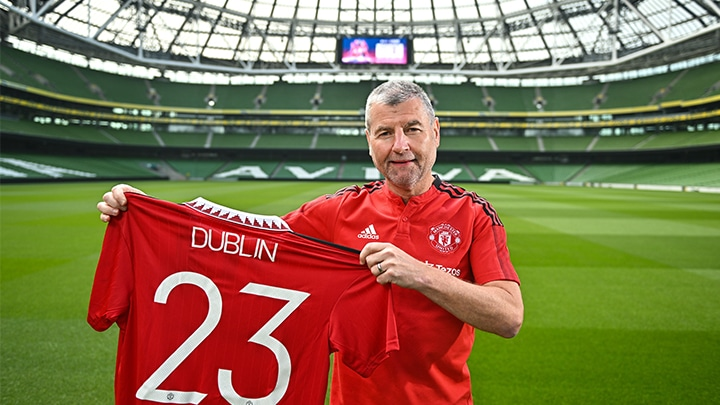
Denis Irwin is a name synonymous with consistency, professionalism, and success in the world of football. As a player, he epitomized the ideal fullback, delivering exceptional performances on both sides of the pitch. Throughout his illustrious career, he cemented his place as one of the best right-backs of his generation. Whether it was his time at Manchester United or his national team appearances for the Republic of Ireland, Irwin’s contribution to football left an indelible mark. This article explores his career, achievements, and the legacy he left behind in the world of football.
Early Life and Football Beginnings
Denis Irwin was born on October 31, 1965, in Leeds, England. Growing up in a family that loved football, Irwin’s potential was evident from an early age. His talent didn’t go unnoticed, and he joined the Oldham Athletic youth system, where his football journey truly began.
He made his debut for Oldham Athletic in 1983, playing as a promising left-back. Irwin’s work ethic and disciplined performances soon gained attention. During his time at Oldham, he gained invaluable experience, developing his attacking and defensive skills, which would later serve him well at the highest level.
Irwin’s Move to Manchester United
In 1990, Irwin made the career-defining decision to join Manchester United, managed by Sir Alex Ferguson. The transfer, worth £625,000, was seen as a step up for the young fullback, but Irwin’s consistency, composure, and versatility quickly endeared him to the Manchester United fans. He could play on both sides of the defence, but it was his right-back role that allowed him to showcase his best attributes.
Irwin’s Contributions to Manchester United During the Dominance Era
Irwin was an integral part of the Manchester United squad during one of the most successful periods in the club’s history. From the moment he arrived, his calmness, technical ability, and reliable defending made him one of Sir Alex Ferguson’s most trusted players. The club was beginning to rise to prominence under Ferguson, and Irwin’s arrival coincided with United’s growing dominance in English football.
His key attributes—his pinpoint crossing, excellent free kicks, and solid defensive positioning—made him a fan favorite. Irwin’s ability to contribute both defensively and offensively became essential to United’s tactical setup.
Premier League Glory and Domestic Success
Irwin was pivotal in Manchester United’s early 1990s resurgence. In the 1992-93 season, United claimed the Premier League title for the first time in 26 years, with Irwin playing a central role at right-back. His defensive reliability and ability to support the attack with crosses and assists made him one of the best fullbacks in England at the time.
Following the Premier League victory, Irwin continued to be a key player for the Red Devils, helping the club win multiple league titles. His exceptional consistency helped United maintain its dominance in English football throughout the 1990s. Some of the most significant moments in United’s history, including the 1994 FA Cup and the 1996 Premier League title, saw Irwin’s contributions be crucial.
The Treble Triumph: 1999
Perhaps the pinnacle of Denis Irwin’s career came in the 1998-1999 season when Manchester United won the historic treble—the Premier League, FA Cup, and UEFA Champions League. Irwin played an important role in all competitions, contributing defensively and offensively.
The Champions League final, which United won 2-1 against Bayern Munich, was a defining moment of the club’s history, and Irwin’s presence in the team was an important factor in their success. His ability to maintain composure and contribute under pressure helped Manchester United lift the prestigious trophy and complete a remarkable achievement.
Later Years at Manchester United
Irwin continued to be a mainstay in Manchester United’s backline as the club enjoyed further success. However, as the years passed, he was gradually replaced by younger players like Gary Neville and Jaap Stam. Despite this, Irwin’s professionalism never waned, and he remained an important member of the squad until his departure in 2002.
In total, Irwin made 368 appearances for Manchester United, scoring 22 goals and winning 7 Premier League titles, 3 FA Cups, and 1 UEFA Champions League title, among other honours.
International Career: Representing the Republic of Ireland
Irwin’s contributions weren’t confined to club football. He also enjoyed a distinguished international career with the Republic of Ireland national team. Irwin made his international debut in 1986 and became an essential player for Ireland, earning 56 caps over his career. Known for his calm and composed approach, Irwin often played in important qualifiers and international tournaments.
Although Ireland didn’t achieve significant success on the world stage during Irwin’s time, he was a consistent figure in their defensive line. His experience and leadership on the field were crucial during Ireland’s campaigns in the 1994 FIFA World Cup and Euro 2000 qualifiers.
A Strong Defensive Presence
Irwin’s time with Ireland was marked by his resilience and his ability to marshal the backline. He was a crucial part of the team during the 1994 World Cup, where they reached the quarterfinals. In this period, he earned respect as a reliable fullback and a player who always gave his best in every match.
Denis Irwin’s Playing Style: A Complete Fullback
Denis Irwin’s playing style was a textbook example of what a fullback should be. He was renowned for his consistency, defensive solidity, and ability to contribute to attacks. Irwin had the discipline to perform his primary defensive duties, but he also knew when to overlap on the right flank and support the attack.
Defensively Sound
Irwin’s defensive attributes were outstanding. He was intelligent in positioning, rarely caught out of position, and could read the game. His excellent tackling, aerial ability, and leadership in the backline made him a formidable opponent for any winger. As part of a well-organized Manchester United defence, Irwin helped ensure the team maintained solid foundations while still being able to push forward.
Attacking Threat
Although primarily a defensive player, Irwin was also effective going forward. His ability to whip in dangerous crosses made him a potent attacking option. He had excellent vision and frequently created opportunities for his teammates with accurate deliveries into the box. Additionally, Irwin was known for his precise free kicks, often scoring from dead-ball situations—a rare skill for a fullback.
Versatility
Irwin’s versatility was one of his key strengths. While primarily a right-back, he could comfortably play on the left side, adapting to different tactical setups. This flexibility allowed Sir Alex Ferguson to use him in various roles, knowing he could deliver solid performances wherever needed.
Legacy and Retirement
After leaving Manchester United in 2002, Irwin had a short stint with Wolverhampton Wanderers before announcing his retirement from professional football in 2004.
Irwin’s impact on the game continued off the pitch after his retirement. He became involved in coaching, media work, and charity events, where his knowledge of the game was highly regarded. He was celebrated for his professionalism, consistency, and the standards he set as a footballer.
Denis Irwin in the Media
Post-retirement, Irwin has remained a prominent figure in the football world, offering expert analysis and commentary on various platforms. His insights into the game, especially regarding fullbacks and defending, are often sought after by media outlets. Irwin’s professionalism both on and off the pitch has made him a respected figure in the footballing community.
FAQs
What was Denis Irwin’s best season at Manchester United?
Denis Irwin’s best season at Manchester United was arguably the 1998-1999 season when he played an integral role in the team’s historic treble-winning campaign. He provided both defensive stability and attacking contributions, helping United win the Premier League, FA Cup, and UEFA Champions League.
How many trophies did Denis Irwin win with Manchester United?
Denis Irwin won a total of 10 major trophies with Manchester United, including 7 Premier League titles, 3 FA Cups, and 1 UEFA Champions League.
What made Denis Irwin a great fullback?
Denis Irwin was a complete fullback. His defensive abilities were flawless, and he had the intelligence to read the game. Offensively, he was a reliable crosser of the ball and a set-piece specialist. His consistency, leadership, and versatility made him one of the best fullbacks of his generation.
Was Denis Irwin involved in any international tournaments?
Yes, Denis Irwin was part of the Republic of Ireland team during the 1994 FIFA World Cup and the Euro 2000 qualifiers. While Ireland didn’t achieve major tournament success, Irwin’s contributions were vital in securing Ireland’s place in international competitions.
What is Denis Irwin doing now?
After retiring from football, Denis Irwin has worked as a football pundit, offering his expertise on various media platforms. He is also involved in charity work and coaching, sharing his knowledge with the next generation of footballers.
In Summary
Denis Irwin’s football career is a testament to the values of hard work, professionalism, and consistency. His time at Manchester United marked an era of unprecedented success, and his contributions to the Republic of Ireland were invaluable. Irwin’s legacy is built on his excellence as a fullback, both defensively and offensively, and he will always be remembered as one of the best players to ever wear a Manchester United shirt.
Through his intelligence, versatility, and leadership, Denis Irwin left an enduring impact on the game, and his story continues to inspire aspiring footballers around the world.